Haway's Buyer's Guide: Everything You Should Know About Custom Trailer Torsion Axle Manufacturers for a Smooth Ride
- Share
- publisher
- Jessy
- Issue Time
- Jan 24,2026
Summary
Axles are crucial for a trailer's safety, performance, and longevity, so careful consideration is needed. In this guide, Haway will explore key aspects of choosing the right custom trailer torsion axle manufacturer.
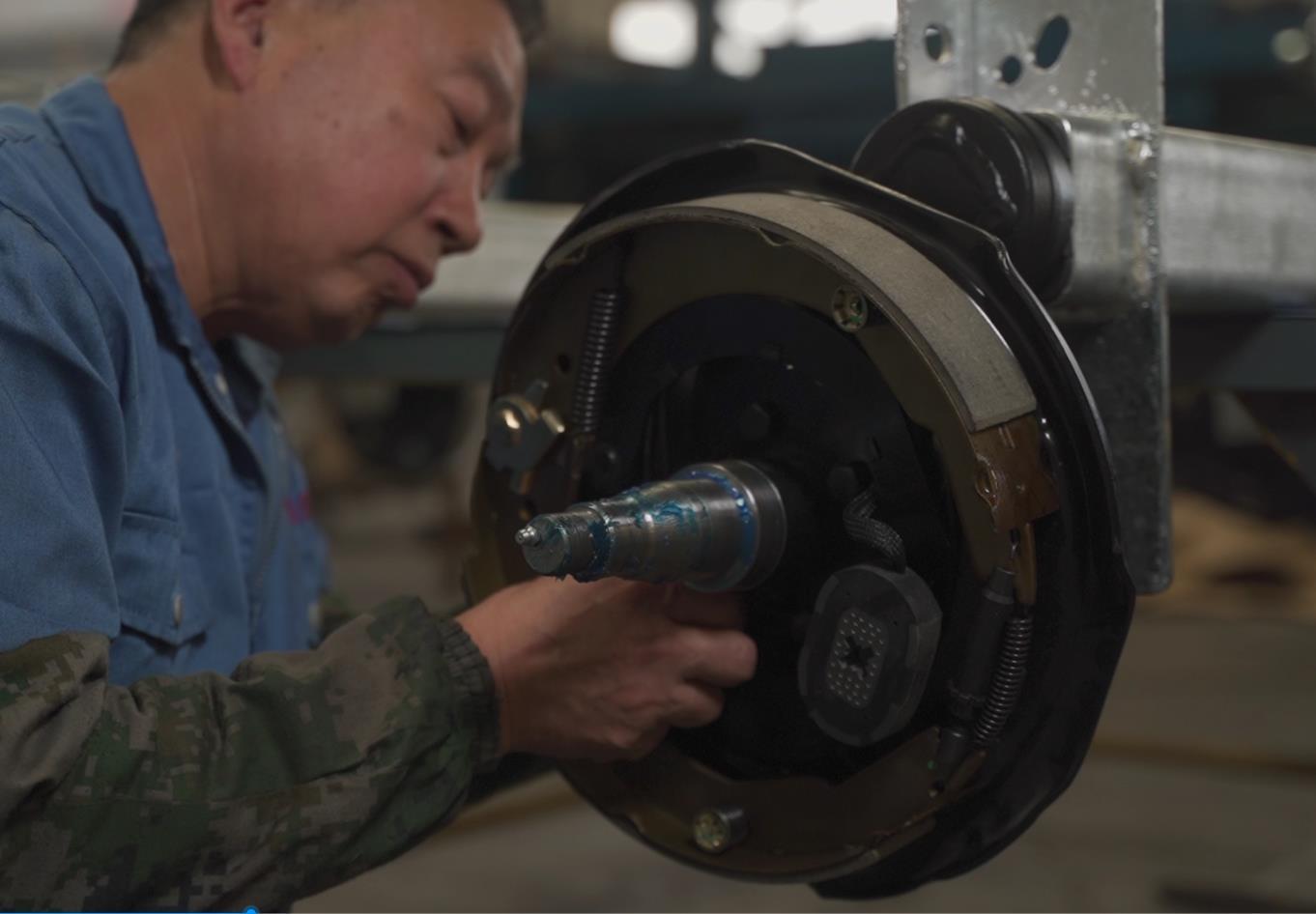
As pivotal components ensuring a trailer's safety, performance, and longevity, axles require careful consideration. In this guide, we at Haway will delve into the critical aspects of selecting the right custom trailer torsion axle manufacturer, especially for those prioritizing a smooth and stable ride. Understanding the mechanics, advantages, and available options in custom trailer torsion axles is paramount. We aim to equip you with the knowledge to make an informed decision, ensuring your trailer is outfitted with precision-engineered components built to last. This comprehensive guide from Haway is designed for both seasoned trailer manufacturers and distributors, as well as individual trailer owners, offering insights into the specialized world of custom trailer torsion axles and how they can elevate your hauling experience.
The Core Mechanics of Custom Trailer Torsion Axles: A Haway Perspective
Understanding what goes on inside a torsion axle is the first step toward appreciating its superior performance. Unlike traditional suspension systems that are often complex and exposed, the torsion axle is a marvel of self-contained engineering. At Haway, we believe that an informed customer is a satisfied customer, so let's break down the fundamental principles that make this technology a game-changer for modern trailers.
How Custom Trailer Torsion Axles Deliver a Superior Ride
The secret to the exceptionally smooth ride provided by a torsion axle lies in its unique internal construction. Instead of relying on metal-on-metal leaf springs, a torsion axle uses the natural elasticity of rubber to absorb road shock. Inside the main axle housing, rubber cords are positioned around a central bar. When a wheel encounters a bump, the force causes the torsion arm to pivot, which in turn twists the inner bar against the resistance of the rubber cords. The rubber compresses to soak up the impact, effectively isolating the trailer frame—and your cargo—from the harshness of the road.
This mechanism provides a dampening effect that results in a significantly quieter and less jarring towing experience. The energy from bumps and potholes is dissipated within the axle itself, rather than being transferred throughout the trailer. This not only protects sensitive cargo but also reduces driver fatigue on long journeys. The result is a stable, controlled ride that feels less like towing and more like an extension of your vehicle.
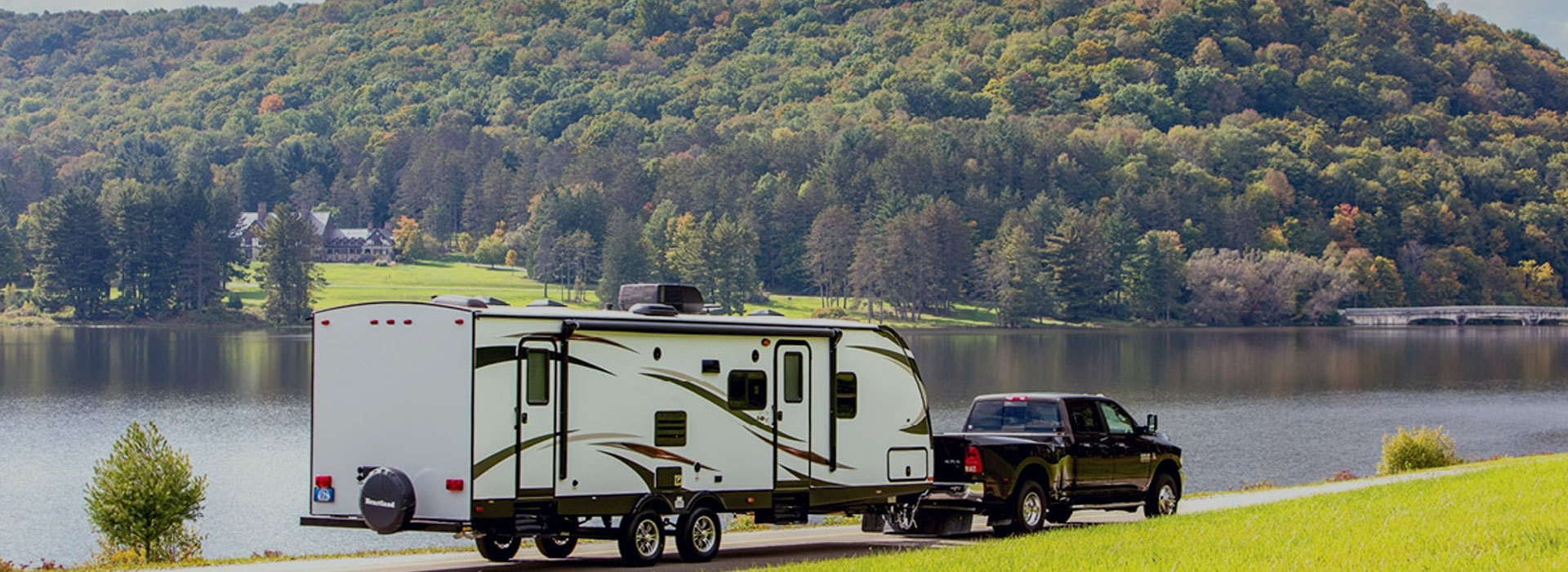
Independent Suspension: A Key Advantage of Custom Trailer Torsion Axles
One of the most significant benefits of a torsion axle system is that it functions as an independent suspension. Unlike solid beam axles where the wheels are physically linked, each wheel on a torsion axle is connected to its own torsion arm and can move vertically without affecting the wheel on the opposite side. When one tire hits a pothole or debris, only that wheel's suspension compresses, while the other remains stable and in full contact with the road.
This independence is crucial for several reasons:
Enhanced Stability:
By allowing each wheel to react individually, the trailer remains more level and is less prone to swaying or bouncing, especially on uneven or rough terrain. This drastically improves handling and overall safety.Improved Traction:
With each wheel maintaining better contact with the road surface, traction is optimized. This is particularly noticeable when cornering or navigating challenging road conditions where grip is paramount.Reduced Frame Stress:
Because shocks are absorbed locally at each wheel, the twisting forces transferred to the trailer's frame are minimized. This reduces long-term wear and tear on welds, joints, and the overall structure, contributing to a longer trailer lifespan.Components and Functionality of a Custom Trailer Torsion Axle
To fully grasp its ingenuity, it's helpful to visualize the core components working in unison. While designs can vary slightly between manufacturers, a typical Haway custom trailer torsion axle consists of the following key parts:
Main Axle Tube: This is the outer housing, usually square, which is mounted directly to the trailer frame. It acts as a protective casing for the internal components and also serves as a structural cross-member, adding rigidity to the trailer frame.
Inner Torsion Bar: A solid steel bar, often hexagonal or square, that runs through the center of the main tube. This bar is the component that twists under load.
Rubber Cords: These are specially formulated rubber elements pressed between the inner torsion bar and the inside walls of the main axle tube. The resistance of these cords to twisting provides the suspension and shock absorption.
Torsion Arm (or Trailing Arm): This is a lever that connects the inner torsion bar to the spindle. The arm transfers the vertical movement of the wheel into a rotational force on the inner bar. The starting angle of this arm is a critical customizable feature that determines the trailer's ride height.
Spindle: The machined shaft onto which the hub, bearings, and wheel are mounted. In a torsion system, the spindle is an integral part of the torsion arm assembly.
Mounting Brackets: These are welded to the main axle tube and provide the points for bolting the entire axle assembly securely to the trailer frame.
The assembly process is a feat of engineering itself. The rubber cords are often cryogenically frozen to shrink them, allowing for a precise and extremely tight fit when inserted into the axle tube with the inner bar. This ensures there is no slack and that the suspension is immediately responsive. This simple, robust design with few moving parts is the foundation of the torsion axle's renowned durability and low-maintenance operation.
Why Choose a Custom Trailer Torsion Axle Manufacturer for Your Needs?
Opting for a custom torsion axle isn't just about acquiring a component; it's about making a strategic investment in your trailer's performance, safety, and longevity. A generic, off-the-shelf axle might suffice for some, but for those who demand more from their equipment, partnering with a specialized manufacturer like Haway unlocks a new level of efficiency and reliability. The decision to go custom is a decision to prioritize quality and precision engineering tailored specifically to your application.
Enhanced Ride Quality and Reduced Maintenance with Custom Trailer Torsion Axles
The most immediate and noticeable benefit of a torsion axle is the superior ride quality. Its ability to absorb road vibrations and provide a smoother towing experience is unmatched by traditional leaf spring systems. This directly translates to less wear and tear on your cargo, which is especially critical when hauling sensitive equipment, livestock, or valuable goods. The reduction in vibration also extends to the trailer itself, minimizing stress on the frame, fasteners, and other components.
Beyond the smooth ride, the most significant long-term advantage is the drastic reduction in maintenance. Leaf spring suspensions have numerous moving parts—springs, shackles, hangers, bolts—that are all points of wear and require regular inspection and lubrication. In contrast, a torsion axle is a self-contained unit with no metal-on-metal moving parts in its suspension mechanism. This design is inherently low-maintenance; once installed, outside of routine bearing lubrication, the axle itself requires little to no service. This means less downtime, lower operational costs, and more time on the road.
Tailored Specifications: The Haway Advantage in Custom Trailer Torsion Axles
Every trailer has a unique purpose, and a one-size-fits-all approach to its most critical component is fundamentally flawed. This is where the "custom" in custom trailer torsion axle manufacturer becomes paramount. At Haway, we don't just build axles; we engineer solutions. We work directly with you to define the exact specifications your trailer requires.
This customization process includes:
Load Capacity:
We engineer the axle to perfectly match your trailer's Gross Vehicle Weight Rating (GVWR), ensuring it can safely handle its intended load without being overbuilt and unnecessarily heavy.Track Length and Hub Face:
The axle's width is built to your precise measurements, ensuring proper tire clearance and alignment with the trailer's frame for optimal stability.Start Angle:
We can set the starting angle of the torsion arms to achieve the desired ride height for your trailer, whether you need maximum ground clearance or a low-profile design for easy loading.Brake and Hub Options:
From idler hubs to electric or hydraulic brake systems, we provide the stopping power that matches your load and regulatory requirements. We can also accommodate any specific bolt pattern for your chosen wheels.Finishes and Materials:
Depending on the intended use, we offer various protective finishes, such as hot-dip galvanization, which provides excellent corrosion resistance for marine or winter road applications.This meticulous attention to detail ensures that the final product is not just a part, but an integrated component that enhances the trailer's overall safety, performance, and efficiency.
Optimizing Payload and Longevity with Custom Trailer Torsion Axles
A custom-built torsion axle from a dedicated manufacturer directly contributes to your bottom line by optimizing both payload and the trailer's service life. By tailoring materials and specifications, it's often possible to create an axle that is lighter than a comparable standard model without sacrificing strength. This reduction in the trailer's curb weight can translate directly to an increased payload capacity, allowing you to haul more with every trip and improving fuel economy.
Furthermore, the longevity of your entire trailer is enhanced. The smoother ride quality afforded by the torsion system means less stress is transmitted to the trailer's structure. Over thousands of miles, this reduction in vibration and shock prevents premature fatigue of welds, fasteners, and even the cargo itself. Choosing a custom-manufactured axle ensures that it is perfectly suited for its task, avoiding the premature wear that comes from using an under-specced or improperly configured component. A properly specified axle from a quality manufacturer is designed to last the life of the trailer with minimal intervention. This long-term durability makes it a wise investment that pays dividends through reliability and reduced replacement costs.
Navigating Your Options: Key Considerations from a Custom Trailer Torsion Axle Manufacturer
Selecting the right torsion axle requires a clear understanding of your trailer's specific needs. As experienced manufacturers, we at Haway guide our clients through a detailed process to ensure every axle is a perfect match. This involves carefully considering load capacity, trailer design, and the fundamental differences between suspension types. Making an informed decision at this stage is critical for achieving optimal performance, safety, and longevity.
Determining Load Capacity for Your Custom Trailer Torsion Axle
The single most important factor in selecting an axle is its load capacity. Overloading an axle is a serious safety risk that can lead to catastrophic failure, while choosing a vastly over-rated axle adds unnecessary weight and cost. The key is to find the Gross Axle Weight Rating (GAWR) that aligns with your trailer's Gross Vehicle Weight Rating (GVWR).
Here's how to approach it:
1.Identify the GVWR:
This is the maximum permissible weight of the fully loaded trailer, as specified by the trailer manufacturer. It includes the trailer's own weight (curb weight) plus the maximum weight of cargo, fluids, and any accessories. This information is usually found on the trailer's compliance label or VIN sticker.2.Calculate the Payload:
Subtract the trailer's empty weight from the GVWR. The result is your maximum payload capacity.3.Determine the Required GAWR:
The total GAWR for all axles must meet or exceed the trailer's GVWR. For a single-axle trailer, the GAWR should be at least equal to the GVWR. For tandem or triple-axle trailers, you can divide the GVWR by the number of axles to get a baseline for each axle's required capacity.4.Factor in Tongue Weight:
Remember that a portion of the trailer's total weight (typically 10-15%) is carried by the tow vehicle's hitch. However, for rating purposes, it's safest to ensure the combined GAWR of all axles can support the entire weight.5.Always Include a Safety Margin:
It is wise to select an axle with a capacity slightly above your calculated requirement. This provides a buffer and reduces strain on components, contributing to a longer service life.As a custom manufacturer, Haway can build torsion axles to a wide range of capacities, from light-duty utility trailers to heavy-duty equipment haulers, ensuring you get the precise rating you need.
Matching Custom Trailer Torsion Axle Specifications to Your Trailer's Design
Beyond weight capacity, a custom torsion axle must be physically compatible with your trailer's frame and design. Off-the-shelf axles often force compromises in fitment that can affect performance and tire wear. A custom build ensures every dimension is correct.
Key measurements we confirm with our clients include:
Hub-Face-to-Hub-Face:
This is the most critical width measurement. It is the distance from the mounting surface of one hub (where the wheel bolts on) to the mounting surface of the opposite hub. An accurate hub face measurement ensures the tires are properly positioned within the fenders and correctly aligned with the trailer frame.
Outside of Bracket to Outside of Bracket:
This measurement determines where the axle will mount to your trailer's frame. We can weld the mounting brackets at the precise locations needed to match your frame width, ensuring a simple, direct-bolt-on installation.Start Angle:
The starting angle of the torsion arm dictates the trailer's ride height. We can manufacture axles with various start angles, such as 10° down, 22.5° down, or 45° down, to achieve a lower deck for easy loading or higher ground clearance for rough terrain.Frame Clearance:
We consider tire size to ensure there is adequate clearance between the tire and the inside of the trailer frame, as well as sufficient vertical clearance to the fender to allow for full suspension travel.By building the axle to these exact specifications, we eliminate the guesswork and fabrication challenges that can come with trying to adapt a standard-size axle.
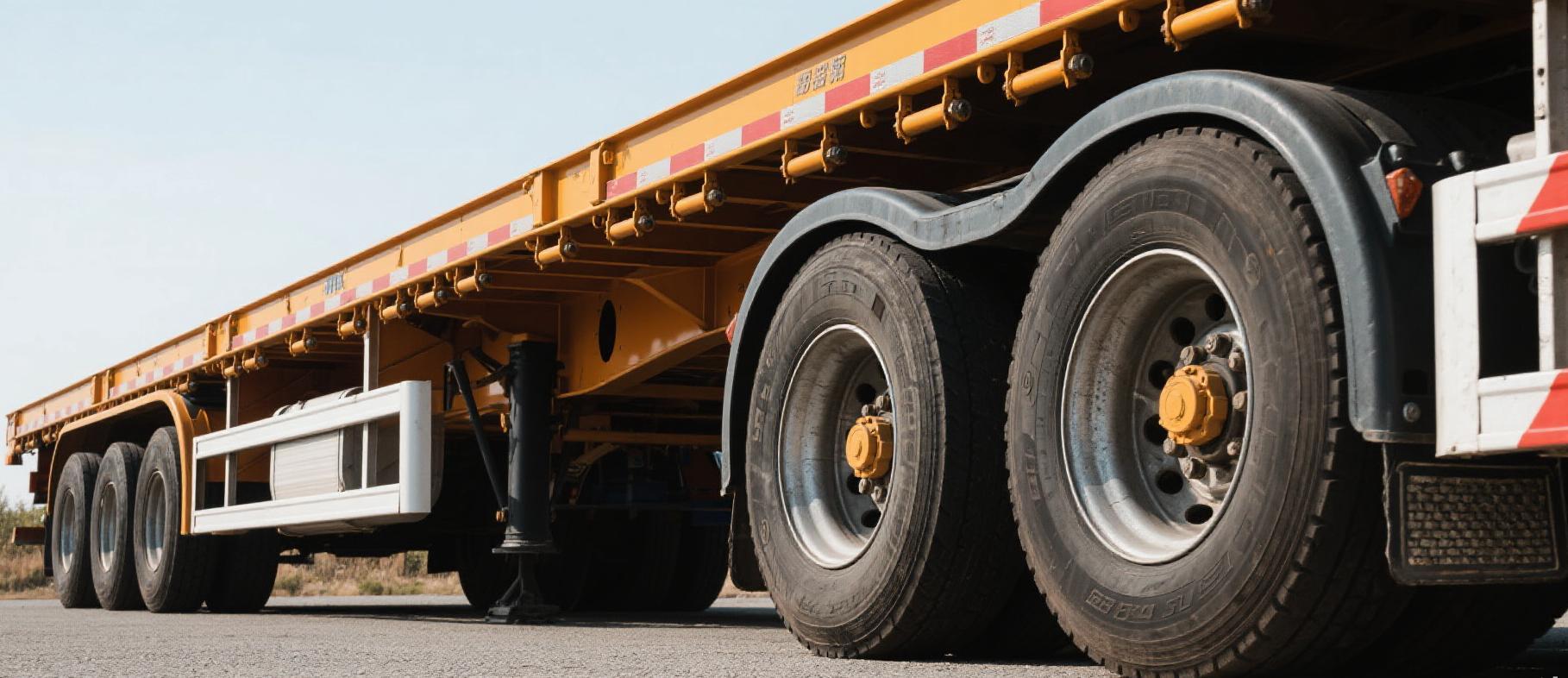
Understanding the Differences: Torsion Axles vs. Leaf Spring Axles
Choosing a torsion axle is often a decision made after comparing it to the more traditional leaf spring suspension. While both have their place, they offer very different performance characteristics, maintenance requirements, and costs.
Here is a comprehensive comparison to help clarify the choice:
| Feature | Custom Trailer Torsion Axle | Leaf Spring Axle |
| Ride Quality | Superior. Independent suspension provides a much smoother, quieter ride by absorbing shock at each wheel. Protects sensitive cargo. | Harsher. Bounces and vibrations from one wheel are transferred across the solid axle, leading to a rougher ride, especially when the trailer is empty. |
| Maintenance | Virtually maintenance-free. The suspension mechanism is sealed with no moving metal-on-metal parts requiring lubrication. | High maintenance. Leaf springs, hangers, and shackles are exposed and require regular inspection for wear and periodic lubrication. |
| Durability | Excellent. The sealed design protects internal components from corrosion and road debris. Galvanized options are ideal for harsh environments. | Good. Leaf springs are known for their ruggedness, but individual components (springs, bushings) can wear out or break and require replacement. |
Performance | Better stability and handling due to independent wheel movement. Reduces trailer sway and improves traction. | Can be better at equalizing loads between axles on tandem setups. Less forgiving on uneven terrain as a single unit. |
Installation | Simpler. The axle is a self-contained unit that bolts directly to the trailer frame. | More complex. Requires mounting hangers, equalizers (on multi-axle setups), shackles, and U-bolts, involving more components and alignment steps. |
Cost | Higher initial purchase price. | Lower initial purchase price, making it a budget-friendly option. |
Failure Mode | If the internal rubber fails, the arm will sag but the wheel typically remains attached, allowing for a low-speed move to safety. Repair usually means full axle replacement. | A broken leaf spring can be a more sudden failure. However, individual components can often be replaced on the roadside. |
Best For | Smooth ride, protecting valuable/sensitive cargo, marine use (with galvanized finish), low-maintenance requirements. | Heavy-duty commercial use, budget-conscious builds, applications where load equalization across multiple axles is critical. |
Ultimately, for users who prioritize a smooth and stable ride, low maintenance, and long-term performance, the benefits of a torsion axle strongly outweigh the higher initial investment.
Maintaining Your Investment: Tips from a Leading Custom Trailer Torsion Axle Manufacturer
A custom trailer torsion axle from Haway is an investment in quality and performance. While renowned for being low-maintenance, a few key inspection and upkeep practices will ensure your axle delivers a safe, smooth ride for its entire lifespan. Protecting your investment is straightforward and primarily involves routine checks of the axle's key stress points and supporting components.
Regular Inspections for Your Custom Trailer Torsion Axle
Periodic visual and physical inspections are the best way to catch potential issues before they become serious problems. We recommend performing these checks annually or every 12,000 miles, and before any long trip.
Here is a simple inspection checklist:
Check Torsion Arm Angle:
When the trailer is on level ground, visually inspect the angle of the torsion arms on both sides. They should be at the same angle. If one arm is sagging noticeably lower than the other, it could be a sign that the internal rubber cords have weakened or failed, and the axle may need replacement.Inspect Mounting Brackets and Welds:
Closely examine the brackets where the axle is bolted to the trailer frame. Look for any signs of cracking in the welds or on the bracket itself. Visible fractures are a serious safety concern and require immediate attention.Look for Bends or Damage:
Visually inspect the axle tube and spindles for any signs of bending or physical damage from impacts with curbs or road debris. A bent axle or spindle will cause excessive tire wear and handling problems.Analyze Tire Wear Patterns:
Uneven tire wear is a classic sign of an alignment or suspension problem. If you notice wear on the extreme inside or outside edge of the tires, it could indicate an issue with the axle's camber or a bent spindle.Test for Suspension Travel:
Safely jack up one side of the trailer frame (never jack from the axle tube itself) and observe the wheel. The wheel should drop down as the weight is taken off it; if there's very little or no downward movement, it's an indication that the rubber suspension has hardened or seized.The Importance of Proper Lubrication for Custom Trailer Torsion Axle Bearings
While the torsion suspension itself is maintenance-free, the wheel bearings are not. Wheel bearings allow your wheels to spin freely with minimal friction, and they rely on a consistent supply of quality grease to prevent overheating and failure. Neglecting bearing maintenance is one of the most common causes of trailer breakdowns.
Recommended Maintenance Schedule:
Repacking Bearings:
As a general rule, wheel bearings should be inspected, cleaned, and repacked with fresh, high-temperature wheel bearing grease every 12 months or every 12,000 miles, whichever comes first.
E-Z Lube® / Grease Zerk Systems:
If your hubs are equipped with grease zerks for easy lubrication, you can top off the grease more frequently, such as every 6 months or 6,000 miles. When adding grease, pump it in slowly while rotating the wheel until you see new grease begin to emerge from the front bearing. This ensures the old grease is flushed out.Signs of Bearing Issues:
During your inspection, listen for grinding or clicking noises as you spin the wheels. Also, try to rock the wheel from top to bottom; excessive play or wobbling can indicate worn-out bearings that need immediate replacement. Always check the grease seals for any signs of leaking, as a failed seal will allow grease to escape and contaminants to enter.Securing Your Custom Trailer Torsion Axle: Mounting Bolt Maintenance
Unlike leaf spring axles that use U-bolts, torsion axles are bolted directly to the trailer frame via their mounting brackets. These mounting bolts are subjected to constant vibration and road forces, which can cause them to loosen over time. Ensuring they remain tight is a critical safety check.
Inspection and Tightening Procedure:
Regular Checks:
As part of your annual maintenance, it's crucial to check the torque of every bolt that fastens the axle to the frame.Use a Torque Wrench:
Do not simply tighten the bolts with a standard wrench. It's essential to use a calibrated torque wrench to tighten the bolts to the manufacturer's specified values. Improper torque—either too loose or too tight—can lead to problems. Over-tightening can stretch the bolts and damage the threads, while under-tightening can allow for movement that may shear the bolts or damage the mounting holes.Consult Manufacturer Specs:
Torque specifications can vary based on the size and grade of the bolts used. Always refer to the specifications provided by your trailer or axle manufacturer to ensure you are applying the correct amount of force.A few minutes spent checking these bolts can prevent the catastrophic failure of an axle separating from the trailer frame. This simple step ensures your investment remains securely attached and ready for the road.
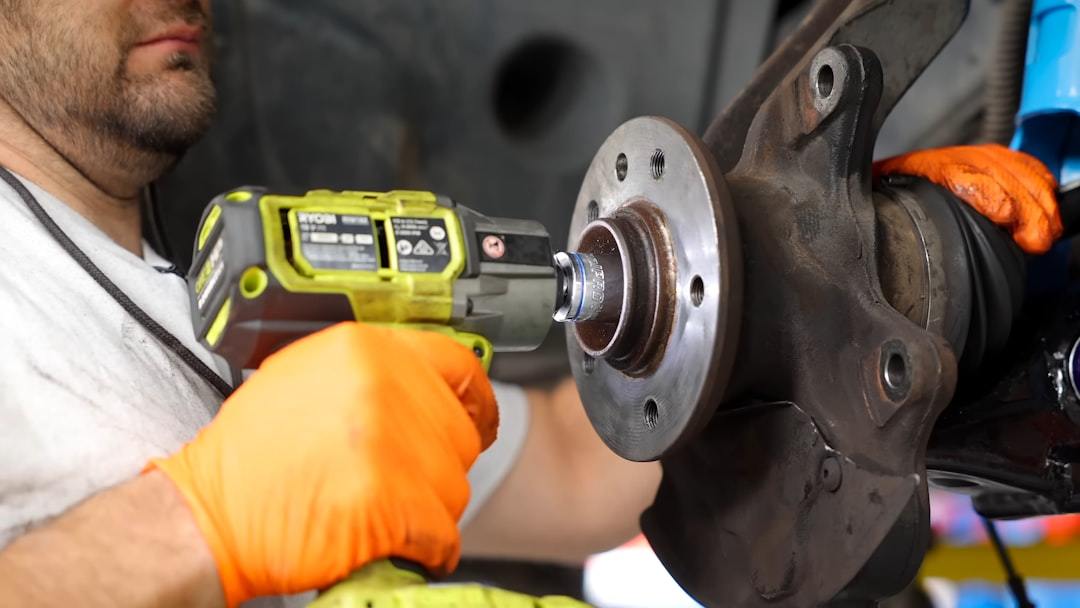
Haway's Commitment as Your Custom Trailer Torsion Axle Manufacturer
At Haway, our mission extends beyond simply manufacturing trailer parts. We are dedicated to being a trusted partner for trailer manufacturers, distributors, and owners who demand excellence. Our commitment is built on a foundation of deep industry expertise, continuous innovation, and unwavering support for our customers. We understand that a trailer is only as strong and reliable as its components, and we take pride in engineering axles that set the standard for quality and performance.
Expertise and Innovation in Custom Trailer Torsion Axle Manufacturing
Our position as a leading manufacturer is the result of years of focused experience and a relentless drive for innovation. The world of hauling and transport is constantly evolving, and we evolve with it. The Haway team is composed of engineers and technicians with specialized knowledge in suspension dynamics, materials science, and manufacturing technologies.
This expertise allows us to:
Continuously Refine Designs:
We are always researching and developing new ways to enhance the performance of our torsion axles, whether it's by improving shock absorption, reducing weight without compromising strength, or increasing durability in harsh environments.Select Superior Materials:
We source high-grade steel for our axle tubes and spindles and utilize proprietary rubber compounds for our torsion cords that are formulated for maximum elasticity and longevity. Every material is chosen for its ability to withstand the stresses of heavy loads and demanding road conditions.Embrace New Technologies:
We stay at the forefront of manufacturing innovation, adopting new techniques and technologies that allow us to produce axles with greater precision and consistency. This commitment to progress ensures that a Haway axle represents the best in modern suspension technology.Our Advanced Manufacturing Processes for Custom Trailer Torsion Axles
The quality of a custom trailer torsion axle is a direct result of the precision and care taken during its creation. Haway has invested heavily in state-of-the-art manufacturing facilities to ensure every axle that leaves our factory meets the highest standards of quality and reliability.
Our manufacturing process is defined by:
Precision CNC Machining:
Spindles and other critical components are machined using computer numerical control (CNC) equipment to achieve exacting tolerances. This guarantees a perfect fit for bearings and hubs, leading to smoother operation and longer life.
Robotic Welding: We utilize robotic welding for mounting brackets and other structural joints. This automated process ensures every weld is consistent, strong, and deeply penetrates the metal, creating a bond that is superior to manual welding.
Rigorous Quality Control:
Quality control is not just a final step; it's integrated throughout our entire production line. From raw material inspection to final assembly checks, every axle undergoes multiple verification stages to ensure it meets our strict dimensional and performance criteria.Advanced Corrosion Protection:
We recognize that corrosion is a primary enemy of trailer components. That is why we offer advanced surface treatments, including premium paint and hot-dip galvanization. Our galvanizing process provides a thick, durable zinc coating that protects the axle inside and out, making it ideal for marine applications and regions that use road salt in the winter.Comprehensive Support and Service from Your Custom Trailer Torsion Axle Manufacturer
Our relationship with our customers does not end when the product ships. We see ourselves as a long-term partner in your success and are committed to providing comprehensive support throughout the life of your axle. This dedication to service is a core part of the Haway promise and a key element of the trust we build with our clients.
Our support includes:
Expert Consultation:
Our knowledgeable team is available to help you design the perfect axle for your needs. We provide technical guidance on everything from calculating load capacity to selecting the right finish.
Expert Consultation:
Our knowledgeable team is available to help you design the perfect axle for your needs. We provide technical guidance on everything from calculating load capacity to selecting the right finish.Installation Support:
We provide clear documentation and are available to answer any questions you may have during the installation process to ensure your axle is mounted correctly and safely.Responsive Customer Service:
Whether you have a question about maintenance, need to order a replacement part, or have a warranty inquiry, our customer service team is ready to provide prompt and helpful assistance.Long-Term Parts Availability:
We stand behind our products by ensuring that wear components like hubs, bearings, and seals are readily available, making future servicing simple and convenient.By choosing Haway, you are not just getting a superior product; you are gaining a partner who is invested in your safety, efficiency, and satisfaction for years to come.
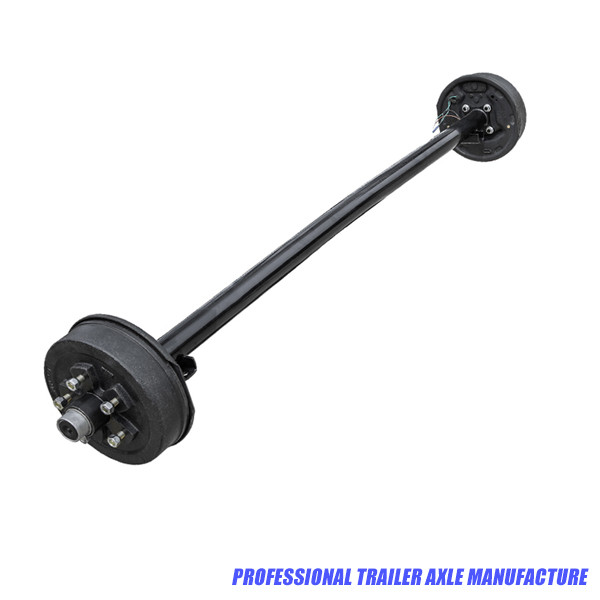
3500 lb trailer axle with 10'' electric brakes, supply custom trailer axle kit.
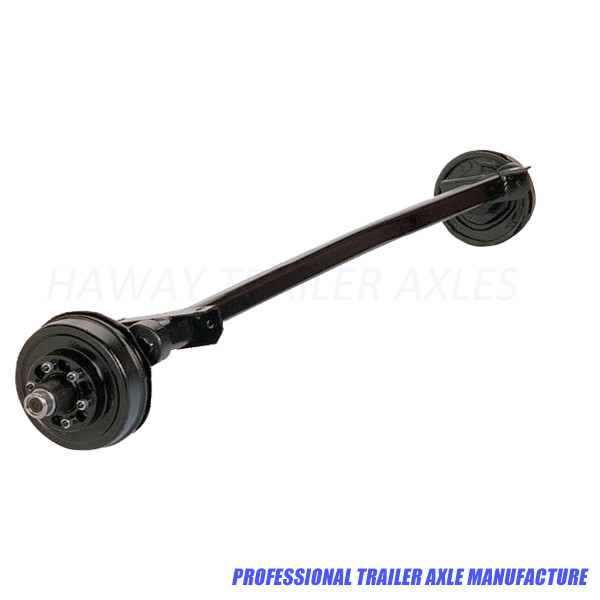
This 5200 lbs torsion axle suspension is with 12'' electric brake and made of heavy duty material.
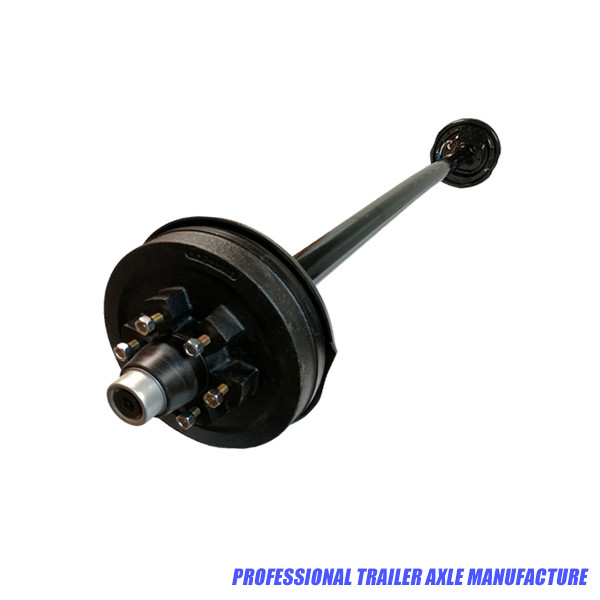
6000 lb trailer axle with 12'' electric brake for sales. Factory supply directly, best price.
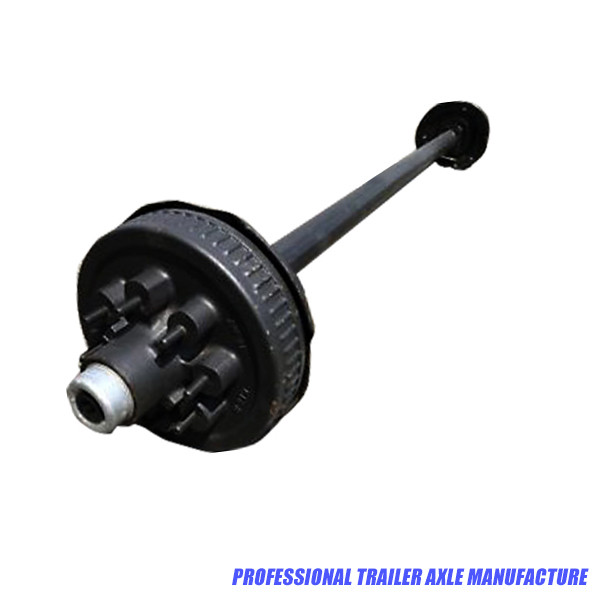
7000 lbs trailer axle with electric brake for sales, reliable trailer axle supplier in China.
Key Takeaways
Choosing the right custom trailer torsion axle manufacturer is a critical decision that directly impacts your trailer's performance, safety, and longevity. This guide has navigated the key aspects of torsion axle technology, from their fundamental mechanics to long-term maintenance.
Here are the most important points to remember:
Superior Ride Quality:
Torsion axles operate on the principle of internal rubber dampening, which absorbs road shock and vibration far more effectively than traditional leaf springs. This results in a smoother, quieter ride that protects your cargo and reduces stress on the trailer frame.The Power of Independent Suspension:
A core feature of torsion axles is that each wheel moves independently. This design enhances stability, especially on uneven terrain, by keeping the trailer level and maximizing tire contact with the road. It significantly reduces sway and improves overall handling and safety.Low Maintenance is a Key Advantage:
With no metal-on-metal moving parts like shackles or hangers, the torsion axle suspension is a sealed, self-contained unit. This design drastically reduces maintenance requirements compared to leaf spring systems, saving you time and money over the life of the trailer.Customization is Crucial for Performance:
A one-size-fits-all approach doesn't work for specialized trailers. Partnering with a custom manufacturer like Haway allows you to specify the exact load capacity, track width, start angle, and brake options your application demands. This tailored approach optimizes performance, safety, and payload.Axle Longevity and Trailer Health:
The smoother ride provided by a torsion axle doesn't just protect the cargo; it extends the life of the entire trailer. By minimizing vibrations and jarring impacts, torsion axles reduce fatigue on welds, fasteners, and the overall trailer structure, representing a smart long-term investment.Informed Selection is Key:
Understanding how to properly determine load capacity (GVWR vs. GAWR) and measure for fitment (hub face, bracket placement) is essential. Making the right choice from the start prevents costly errors and ensures your axle is a perfect match for your trailer.Don't Forget Bearing and Bolt Maintenance:
While the torsion suspension itself is low-maintenance, routine care is still required. This includes periodically repacking or greasing the wheel bearings and regularly checking the torque of the axle's mounting bolts to ensure they remain secure.By prioritizing these factors, you ensure that you're not just buying an axle, but investing in a precisely engineered component that will deliver a smoother, safer, and more reliable towing experience for years to come.
Frequently Asked Questions
Q1. What Is The Average Lifespan Of A Custom Trailer Torsion Axle?
A: With proper care and without being subjected to consistent overloading or severe impacts, a high-quality custom torsion axle from a reputable manufacturer can last the lifetime of the trailer, often 15-20 years or more. The limiting factor is typically the internal rubber cords, which can lose their elasticity and harden over time. Factors that can shorten the lifespan include constant exposure to harsh chemicals, extreme temperatures, and UV rays, as well as frequent use on very rough terrain.
Q2. Can I Replace My Old Leaf Spring Axles With Custom Torsion Axles?
A: Yes, retrofitting a trailer from leaf spring suspension to torsion axles is a very common and highly beneficial upgrade. However, it requires careful measurement and planning. You will need to remove the old springs, hangers, and equalizers. The new torsion axle will bolt directly to the trailer frame, but you must ensure the frame is strong enough at the intended mounting points. A custom manufacturer like Haway can build the torsion axle with mounting brackets positioned at the exact width of your trailer frame, which greatly simplifies the installation process.
Q3. Are Torsion Axles Repairable If They Fail?
A: The torsion axle itself is a sealed unit and is generally not considered repairable in the field. If the internal rubber cords fail, manifest as a sagging arm or a loss of suspension, the entire axle assembly must be replaced. This is a key difference from leaf spring axles, where a single broken spring or shackle can be replaced. However, the components attached to the axle—such as the hubs, bearings, seals, and brakes—are all serviceable and easily replaceable just like on any other axle type.
Q4. How Do I Know If My Existing Torsion Axle Is Worn Out And Needs Replacement?
A: There are a few key indicators of a worn-out torsion axle:
Noticeable Sagging: If the trailer sits lower than it used to, or if one side is visibly lower than the other, the rubber cords have likely degraded and lost their ability to support the load.
Reduced Suspension Travel: Safely jack up the trailer by the frame. The wheel should drop down at least an inch or two as the suspension extends. If the wheel barely moves, the suspension is likely seized or hardened.
Uneven and Rapid Tire Wear: If you are experiencing persistent, unusual tire wear that cannot be solved by balancing or alignment checks of the tow vehicle, it may point to a bent spindle or a failed torsion axle causing poor wheel geometry.
Extremely Harsh Ride: If your trailer suddenly starts bouncing excessively or feels much harsher than it used to, the dampening effect of the rubber cords may be gone.
Q5. Are Torsion Axles Suitable For Heavy-Duty, Multi-Axle Trailers?
A: Absolutely. While leaf spring suspensions have traditionally been favored for heavy-duty applications due to their load-equalizing capabilities, modern torsion axles are engineered for high-capacity use and are an excellent choice for tandem or triple-axle configurations. For multi-axle setups, it's crucial that all axles are from the same manufacturer and have the same start angle and load rating to ensure they work together harmoniously. The independent suspension of torsion axles can provide superior stability and a smoother ride even for the heaviest of loads, which is particularly beneficial for protecting valuable equipment or sensitive cargo.
Q6. Why Is The "Start Angle" Of A Torsion Arm So Important?
A: The start angle is a critical specification because it directly determines the ride height of the trailer. It is the angle of the torsion arm relative to the horizontal plane when the trailer is unloaded. A "0°" start angle means the arm is parallel to the ground, while a "22.5° down" angle means the arm points downward. A higher degree of "down" angle results in a lower trailer deck height, which can be advantageous for loading and unloading vehicles or equipment. Conversely, a smaller down angle (or an "up" angle) provides greater ground clearance. Choosing the correct start angle is essential for ensuring the trailer rides level with the tow vehicle and has the appropriate clearance for its intended use.
Conclusion: Choosing the right custom trailer torsion axle manufacturer is a strategic decision.
Choosing the right custom trailer torsion axle manufacturer is a strategic decision that impacts your trailer's performance, safety, and operational costs. We believe that Haway offers unparalleled quality, customization, and support for all your torsion axle needs.
By prioritizing quality and precision, you're not just purchasing an axle; you're investing in a smoother, more reliable towing experience with a custom trailer torsion axle manufacturer you can trust. Contact us today to discuss your specific requirements and explore our extensive range of products. We encourage you to share this guide with others in the industry and welcome any questions or comments below.